Argus I
Epiretinal, Electronic, Discontinued 2004
- Company
- Second Sight Medical Products
- Institution
- University of Southern California (USC)
- Consortium
- USC Artificial Retina Project
- Inventor
- Mark Humayun
- Recipients
- 6 people implanted to date
- Clinical trial
- NCT00279500 (opens in a new tab)
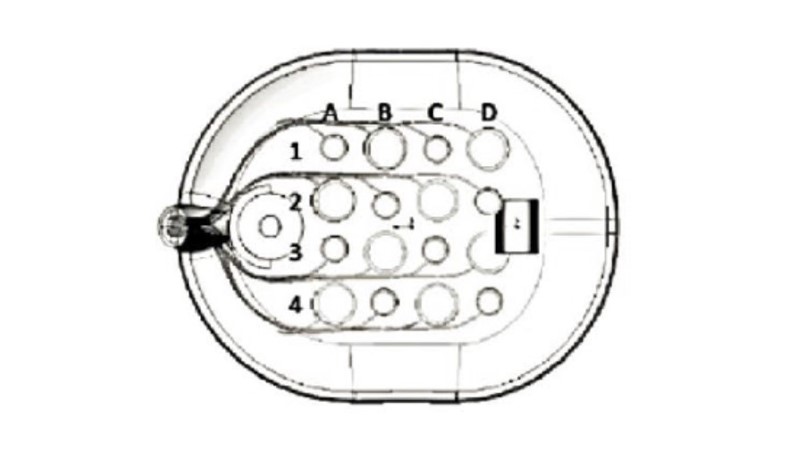
Argus I was Second Sight Medical Products' first chronically implanted epiretinal prosthesislocated on the inner surface of the retina, next to the vitreous, developed with Mark Humayun's team at the University of Southern California. Drawing on components and design concepts from cochlear implants, the prototype used 16 stimulating electrodes in a 4 x 4 array placed on the inner surface of the retinathe light-sensitive neural tissue at the back of the eye that begins visual processing, with external video capture and signal-processing hardware.1
Six people received Argus I implants between 2002 and 2004. The pioneering study demonstrated that electrical stimulationthe use of controlled electric current to activate or alter neural activity of surviving retinal neuronsa specialized cell that processes and transmits information in the nervous system could produce percepts that participants could use for simple visual tasks. Argus I was a research prototype rather than a commercial device and laid the groundwork for the redesigned, higher-density Argus II system.2
Footnotes
-
Weiland & Humayun (2014), Retinal Prosthesisan implanted electronic device that stimulates surviving retinal neurons to create visual percepts. ↩
-
Humayun, de Juan & Dagnelie (2016); The Argus II Retinal Prosthesis System (2015). ↩
Milestones
- First human implantation
- Development discontinued
Device Specifications
- Number of electrodes
- 16
- Electrode layout
- 4 × 4
- Electrode diameter
- 250/500 μm
- Electrode pitch
- 800 μm
Article information
How verification worksVersion 1 (unverified)
Created by Ryan Neydavood. Last updated on by Michael Beyeler.
Authors
- Ryan NeydavoodFormer Content Creator, bionic-vision.org
- Anvitha AkkarajuFormer Data Curator, bionic-vision.org
- Michael BeyelerAssociate Professor, University of California, Santa Barbara (UCSB)