Lawrence Livermore National Laboratory (LLNL)
Founded 1952
- Location
- 7000 East AvenueLivermore, CA 94550-9698, USA
- Website
- llnl.gov (opens in a new tab)Report broken or unsafe link: llnl.gov
Lawrence Livermore National Laboratory (LLNL) is a US Department of Energy national research laboratory established in 1952 in Livermore, California, by Ernest O. Lawrence and Edward Teller. Originally founded to advance nuclear science and technology, the laboratory conducts multidisciplinary research across the physical sciences, engineering, computing, and biomedicine.1
LLNL became involved in retinal prosthesisan implanted electronic device that stimulates surviving retinal neurons to create visual percepts development in 2001, when researchers at its Center for Microtechnology began developing flexible microelectrode arrays capable of conforming to the retinal surface. By 2002, experimental arrays fabricated at LLNL had been evaluated in animals by Mark Humayun's research team.23
In 2004, LLNL entered into a Department of Energy-sponsored Cooperative Research and Development Agreement (CRADA) involving several national laboratories, universities, and Second Sight Medical Products. The agreement provided a mechanism for transferring inventions developed through the DOE Artificial Retina Project to Second Sight for commercialization.4
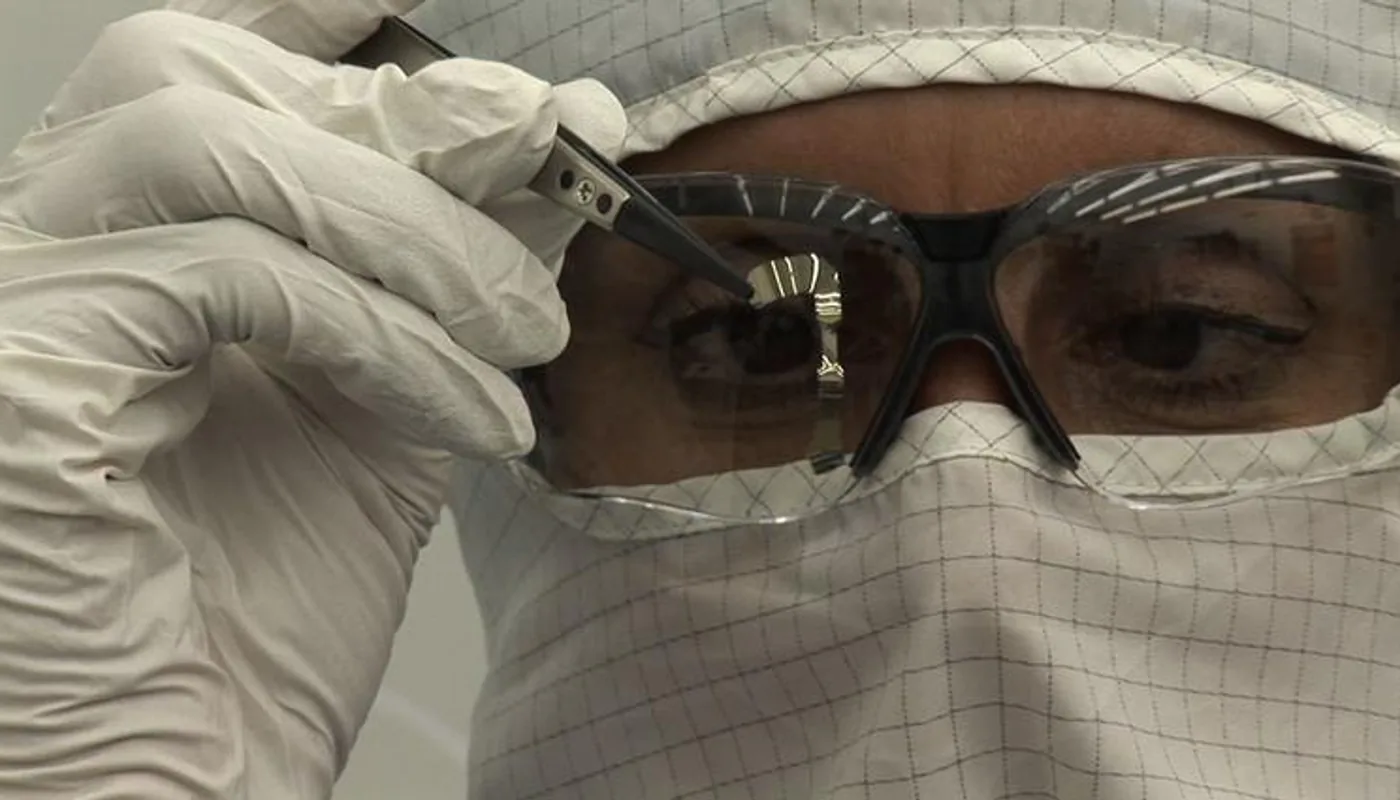
LLNL contributed electrode technology to the development of the Argus II retinal prosthesis, which was commercialized by Second Sight and received FDAthe U.S. federal agency that regulates medical devices, drugs, biological products, and other health-related products Humanitarian Device Exemptionan FDA marketing pathway for certain medical devices intended for rare diseases or conditions approval in 2013.5 By 2009, LLNL had assumed technical leadership of the DOE project, with Satinderpall Pannu leading its artificial retina team. The laboratory subsequently developed higher-density flexible electrode arrays, implantable electronics packaging, and specialized ophthalmic surgical instruments, and was responsible for integrating and assembling an experimental next-generation retinal prosthesis containing 240 stimulating electrodes.36
The Artificial Retina Project also established a technological foundation for LLNL's subsequent work on implantable neural interfaces. In collaboration with Loren Frank's laboratory at the University of California, San Francisco (UCSF), an LLNL team led by Vanessa Tolosa adapted flexible microelectrode technologies developed during the retinal prosthesis project for large-scale intracortical neural recording.7 Tolosa subsequently joined the founding team of Neuralink in 2017, providing a historical connection between the development of retinal prostheses and contemporary intracortical neural interface technologies.89
Footnotes
-
Lawrence Livermore National Laboratory. Our History (opens in a new tab). ↩
-
Lawrence Livermore National Laboratory (December 3, 2002). Laboratory Engineers Developing Microelectronics for Artificial Retina Project (opens in a new tab). ↩
-
Lawrence Livermore National Laboratory (July 31, 2009). Lab Team Sets Sight on New Artificial Retina (opens in a new tab). ↩ ↩2
-
Lawrence Livermore National Laboratory (October 14, 2004). Livermore Scientists Join DOE Consortium and Private Company to Develop Artificial Retina (opens in a new tab). ↩
-
Lawrence Livermore National Laboratory (February 15, 2013). Retinal Prosthesis LLNL Helped Develop Is Approved by the FDA (opens in a new tab). ↩
-
Lawrence Livermore National Laboratory (2013). Artificial Retina: Invention of the Year (opens in a new tab). ↩
-
Lawrence Livermore National Laboratory (July 16, 2014). Lab Expertise Tapped to Understand How the Brain Retrieves Memories (opens in a new tab). ↩
-
Lawrence Livermore National Laboratory (2019). LLNL/UCSF-Developed Implants Enable Unprecedented Recordings of Brain Activity (opens in a new tab). ↩
-
Urban T (2017). Neuralink and the Brain's Magical Future (opens in a new tab). ↩
Visual Prosthesis
Associated implants, including those of research groups based here, are maintained on the individual implant profiles.
Research Groups

Former Researchers
Bionic vision researchers who used to work or study here; this list may not be exhaustive.
- Satinderpall S. Pannu, Director2003 - 2016
- Vanessa M. Tolosa, Neurotechnologies Lead2010 - 2017

Article information
How verification worksCreated on by Michael Beyeler. Last updated on by Michael Beyeler.
Authors
- Michael BeyelerAssociate Professor, University of California, Santa Barbara (UCSB)